
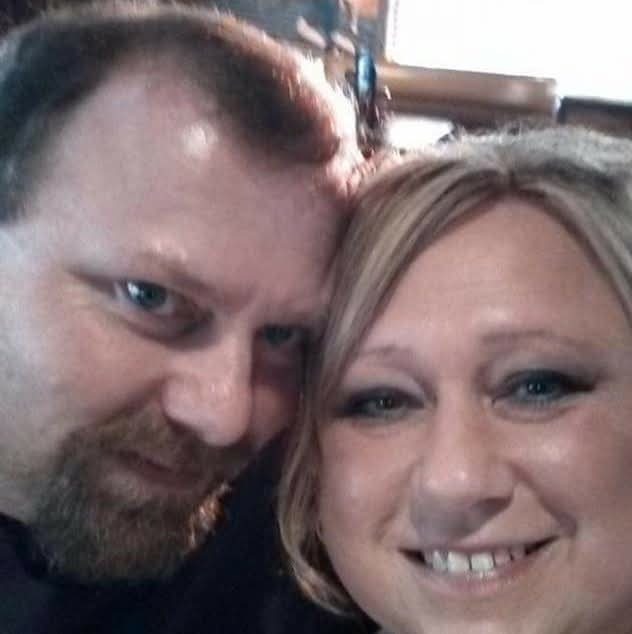
The rural highways of central Wisconsin, known for their scenic beauty through farmland and forest, became the site of a devastating tragedy on a Monday evening in April 2026. Lori Whiteley, 57 years old, lost her life after being ejected from a pickup truck that left the roadway and overturned in a violent rollover crash on Highway 73 near Apple Road, south of Vesper in the Town of Siegel. According to authorities, the fatal incident occurred around 5 p.m. when 911 received a call reporting a single vehicle crash.
Investigators say a pickup truck was traveling southbound on Highway 73 when it suddenly left the roadway and overturned. Lori Whiteley, a passenger in the vehicle, was ejected during the crash, suffering severe injuries. Emergency responders transported her to a hospital in Wausau, where medical staff fought to save her life.
Tragically, despite treatment and efforts to stabilize her condition, Whiteley passed away the following day due to the extent of her injuries. As the Wisconsin State Patrol continues to investigate the circumstances surrounding the crash, the communities of Plainfield and Vesper are left mourning a woman whose life was taken far too soon in a normal evening that turned tragic in an instant.
The Crash A Single Vehicle Rollover on Highway 73
The incident occurred around 5 p.m. on Highway 73 near Apple Road, a location south of Vesper in the Town of Siegel. Highway 73 is a two lane rural road that winds through Wood County, connecting small communities and farmlands. At 5 p.m., the sun would still have been high in the sky, providing good visibility. The weather, though not specified in the original article, would have been a factor in the crash. Spring in Wisconsin can bring rain, wind, and rapidly changing conditions.
According to investigators, a pickup truck was traveling southbound on Highway 73 when it suddenly left the roadway and overturned. The phrase “suddenly left the roadway” indicates that the departure was unexpected and likely rapid. The driver may have lost control due to speed, a mechanical failure, a distraction, a medical emergency, or a road hazard such as gravel, ice, or an animal. The truck then overturned, causing a violent rollover. Rollover crashes are among the most dangerous types of collisions because they expose occupants to multiple impacts and increase the risk of ejection.
Lori Whiteley was a passenger in the vehicle. She was not driving. She was simply riding along, perhaps heading home, perhaps going to visit family, perhaps running an errand. In a matter of seconds, her life was over. The driver of the pickup truck is not named in the original article. That is standard practice when no charges have been filed and the investigation is ongoing. The driver may have survived the crash or may have been injured. The original article does not specify the driver’s condition.
The Ejection A Critical Factor
Lori Whiteley was ejected during the crash. Ejection from a vehicle is one of the most dangerous outcomes in any crash. When a person is thrown from a car or truck, they lose the protection of the vehicle’s safety systems. No seat belt, no airbag, no crumple zone can help a body that is hurtling through the air toward the ground, a tree, a guardrail, or the pavement. The fact that Whiteley was ejected suggests that either she was not wearing a seat belt at the time of the crash, or the force of the rollover was so extreme that it overcame the restraint system.
Seat belts are designed to keep occupants inside the vehicle during a crash. When a person is ejected despite wearing a belt, it usually means the crash involved a rollover that compromised the integrity of the passenger compartment, or that the belt failed mechanically. The Wisconsin State Patrol’s investigation will likely examine whether seat belts were in use and whether they functioned properly.
The injuries from ejection are typically severe. Whiteley suffered critical injuries that required immediate hospitalization. Emergency responders arrived quickly at the scene, a testament to the professionalism of Wood County’s EMS system. They provided pre hospital care and transported her to a hospital in Wausau. Wausau is the largest city in the region, approximately 30 miles north of Vesper, and its hospital has the trauma resources needed to treat severe injuries.
The Fight for Life Hospitalization and Death
Lori Whiteley was transported to a hospital in Wausau, where medical staff fought to save her life. Doctors and nurses worked through the night, performing surgeries, administering blood transfusions, and doing everything modern medicine could offer. But the injuries she sustained in the rollover and ejection were too severe. Despite treatment and efforts to stabilize her condition, Whiteley passed away the following day at the hospital.
That detail passing away the following day is significant. It means that Lori Whiteley did not die instantly at the scene. She was alive when the ambulance arrived. She was alive during the transport to Wausau. She was alive when she entered the emergency room. For a period of hours, there was hope. Her family may have been called to the hospital. They may have sat in a waiting room, praying for a miracle. They may have been allowed to see her, to hold her hand, to say goodbye. Then the hope ended. The doctors emerged with grim faces. The machines were turned off. And Lori Whiteley was gone.
This delayed death does not make the loss any easier for the family. If anything, it adds a layer of torture. The hope that she might survive, followed by the confirmation that she would not. The family will forever remember the hospital, the fluorescent lights, the smell of antiseptic, the moment when their world changed.
The Victim Lori Whiteley, 57
Lori Whiteley was 57 years old. She was a resident of Plainfield, Wisconsin, a small village in Waushara County with a population of approximately 900 residents. Vesper, where the crash occurred, is even smaller, an unincorporated community in Wood County. These are the kinds of places where everyone knows everyone, where neighbors help neighbors, where a single tragedy resonates through the entire community.
The original article does not provide biographical details about Lori her occupation, her family structure, her interests, or her dreams. That information will emerge in the coming days as family members speak to the media and as obituaries are published. What is known is that she was 57, that she was from Plainfield, and that she was a passenger in a pickup truck that crashed on Highway 73. She was someone’s wife, someone’s mother, someone’s grandmother, someone’s friend. And now she is gone.
The Community Plainfield and Vesper Mourn
The communities of Plainfield and Vesper are mourning deeply following the tragic loss of Lori Whiteley. These are small, close knit towns where residents look out for one another. When a member of the community dies, especially in a sudden and violent manner, the grief is collective. Neighbors bring food. Churches hold prayer vigils. Friends gather to share memories and support one another.
The original article states that Whiteley’s death has left family, friends, and loved ones in shock. Shock is a common reaction to sudden death. The mind cannot immediately process the information. It rejects it. It says, “No, that can’t be true. I just saw her yesterday. She was fine.” The shock gradually wears off, replaced by the crushing weight of grief. But in the immediate aftermath, the family is numb, unable to fully comprehend what has happened.
The sudden tragedy has cast a deep sadness across the area, as those who knew her struggle to accept the heartbreaking news of her passing. That phrase “deep sadness” is an understatement. The sadness is not deep. It is bottomless. It is a pit that has opened up in the hearts of everyone who loved Lori Whiteley, and it will never fully close.
The Investigation Wisconsin State Patrol
The Wisconsin State Patrol continues to investigate the circumstances surrounding the crash, working to determine what caused the truck to leave the roadway and overturn. The State Patrol is the lead agency for crash investigations on state highways, and they have specialized reconstruction teams that can analyze skid marks, vehicle damage, and other physical evidence.
Key questions for the investigation include whether speed was a factor, whether the driver was impaired by alcohol or drugs, whether a mechanical failure such as a tire blowout or brake failure caused the truck to leave the road, whether the driver suffered a medical emergency such as a heart attack or seizure, and whether road conditions or hazards contributed to the crash. The investigation will also examine whether seat belts were in use and whether the truck’s tires, suspension, and steering systems were functioning properly.
No additional details have been released at this time as the investigation remains ongoing. That is standard practice. The State Patrol will not release information that could compromise the investigation or that has not been fully verified. The public may have to wait weeks or months for a final report.
The Driver A Missing Piece of the Story
The original article does not identify the driver of the pickup truck. That absence is notable. The driver could be a family member, a friend, or an acquaintance of Lori Whiteley. The driver could have survived the crash with minor injuries, or could be hospitalized with serious injuries. The driver could be cooperating fully with investigators, or could be facing potential charges.
If the driver was impaired by alcohol or drugs, they could face charges including homicide by intoxicated use of a vehicle, a felony in Wisconsin. If the driver was speeding or driving recklessly, they could face charges including reckless homicide. If the crash was caused by a medical emergency or a mechanical failure beyond the driver’s control, the driver may face no criminal charges at all, though they will have to live with the knowledge that Lori Whiteley died while riding in their vehicle.
The driver, whoever they are, is also a victim in a sense. They survived a violent rollover crash. They watched a passenger be ejected. They may have injuries of their own. They will carry the memory of this crash for the rest of their life. They will likely need counseling and support. The community should not rush to judgment until the investigation is complete.
The Danger of Rural Roads and Rollover Crashes
The crash that killed Lori Whiteley is a tragic example of the dangers of rural roads and rollover crashes. According to the National Highway Traffic Safety Administration, rollover crashes account for approximately 30 percent of all passenger vehicle fatalities, even though they represent only a small percentage of total crashes. Pickup trucks are particularly prone to rollovers because they have a higher center of gravity than passenger cars.
Rural roads like Highway 73 often have narrow shoulders, steep ditches, and obstacles such as trees and utility poles close to the roadway. When a vehicle leaves the road on a rural highway, the chances of a rollover are high. The vehicle may hit a ditch or an embankment, causing it to tip and roll. The driver may overcorrect, causing the vehicle to swerve back across the road and roll.
The fact that this crash occurred at 5 p.m., in daylight, with good visibility, makes it even more puzzling. What caused the driver to lose control? Was there an animal in the road? Did the driver fall asleep? Was there a distraction inside the vehicle? The investigation will seek to answer these questions, but the answers may never fully satisfy the family’s need to understand.
Holding Onto Memories
As the investigation continues and the community mourns, the family and friends of Lori Whiteley are left to do the hardest work of all. They must hold onto their memories of her while also confronting the reality of her death. They must grieve her loss while also supporting one another. They must be patient while the investigation proceeds, even though every day without answers feels like an eternity.
The original article states that loved ones will continue to grieve and remember Lori’s life, holding onto cherished memories as they face this unimaginable sorrow. That is the work of grief. It is not linear. It does not follow a schedule. It comes in waves, sometimes receding, sometimes crashing over the survivor without warning. The cherished memories are both a comfort and a source of pain. A comfort because they remind the family of who Lori was. A pain because they remind the family of what they have lost.
The community now stands together in mourning, offering prayers, condolences, and support to all who are hurting during this difficult time. That is the best that a community can do. It cannot bring Lori back. It cannot erase the pain. But it can surround the family with love. It can show up. It can listen. It can hold them when they cry.
Leave a Reply